
ELLA Voices: Building Black Futures with Intention and Audacity
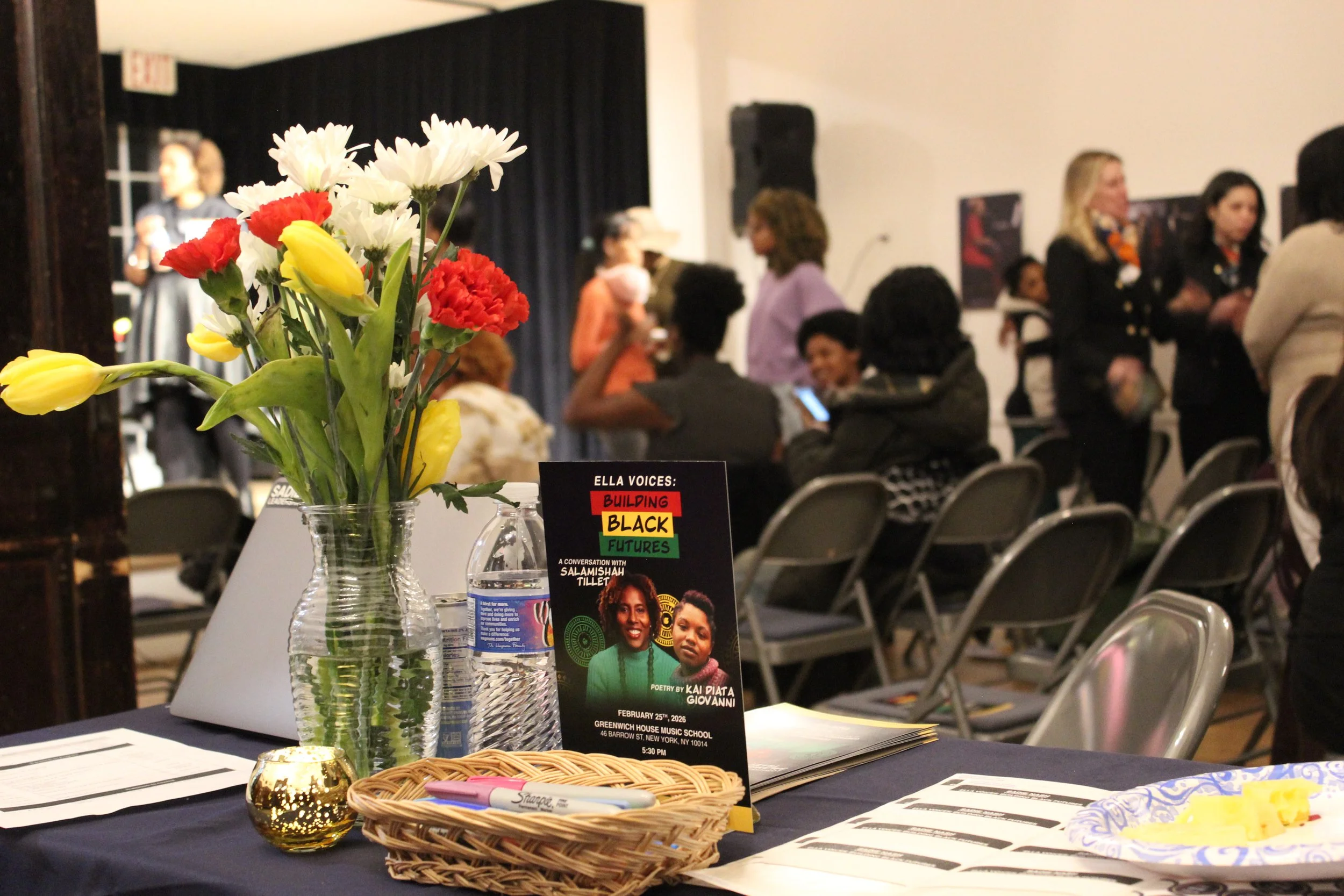
Registration table with guests mingling in the background
On the evening of February 25, ELLA Voices gathered young leaders, alumni, and community members in honor of Black History Month for a conversation that felt urgent and deliberate: how do Black women and gender-expansive leaders build futures with intention?
The night opened with poetry from Kai Diata Giovanni (they/them), 2025 NYC Youth Poet Laureate. Moderated by Sadie Nash alumna and Board Member Juliana Durant (she/her), the conversation brought together Kai, 2024–2025 ELLA Fellow Jade Duffus (she/her), and scholar and Pulitzer Prize-winning writer Dr. Salamishah Tillet (she/her). The conversation traced how leadership evolves across generations and what it takes to build futures that are both bold and sustainable. Toward the beginning, we confronted a central question: What do older generations underestimate about the current generation? And what question do we wish they could answer for us in this present moment?
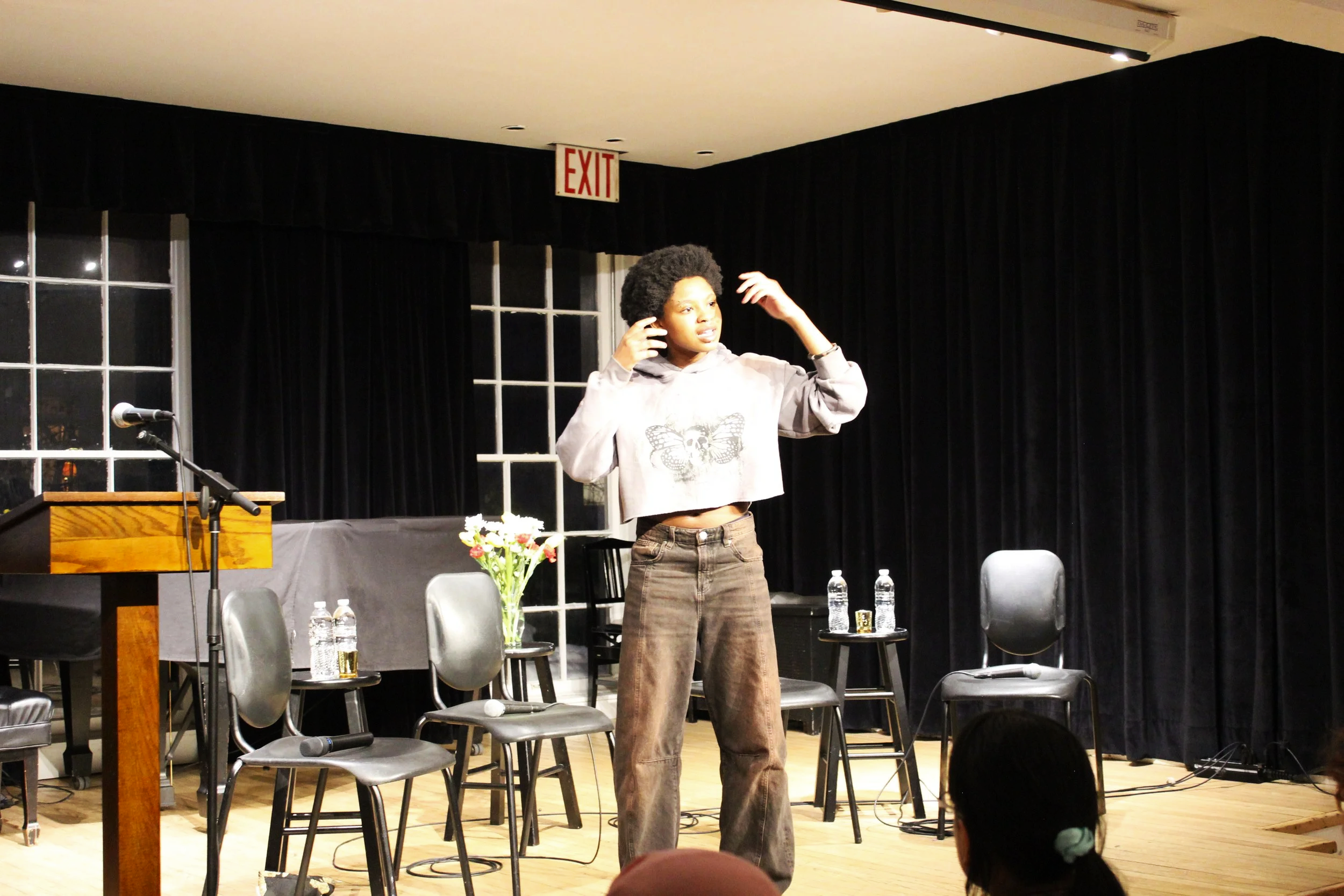
Kai Diata Giovanni performing their poetry
Kai named what older generations often underestimate: “our audacity” — the relentless questioning, organizing, and refusal to accept the status quo.
Jade reflected on the intensity of the moment young people are living through — navigating the instability and political unrest, underscoring that this generation’s audacity is shaped by the depth and urgency of the realities they face every day. “I go to school in DC and the National Guard is walking [around] on my campus … and it's such a weird experience to be going to class and seeing them in the same cafeteria as you, like you should be on the military base, not [having] like a matcha with me!”
Midway through the evening, Juliana shifted the energy with a pointed question about power and strategy. Acknowledging the reach and permanence of Salamishah’s writing, she asked: When your voice holds power, when your words reach thousands, maybe millions — what is your strategy? As a Black woman, how do you decide when to speak, and when your silence is speaking for you?
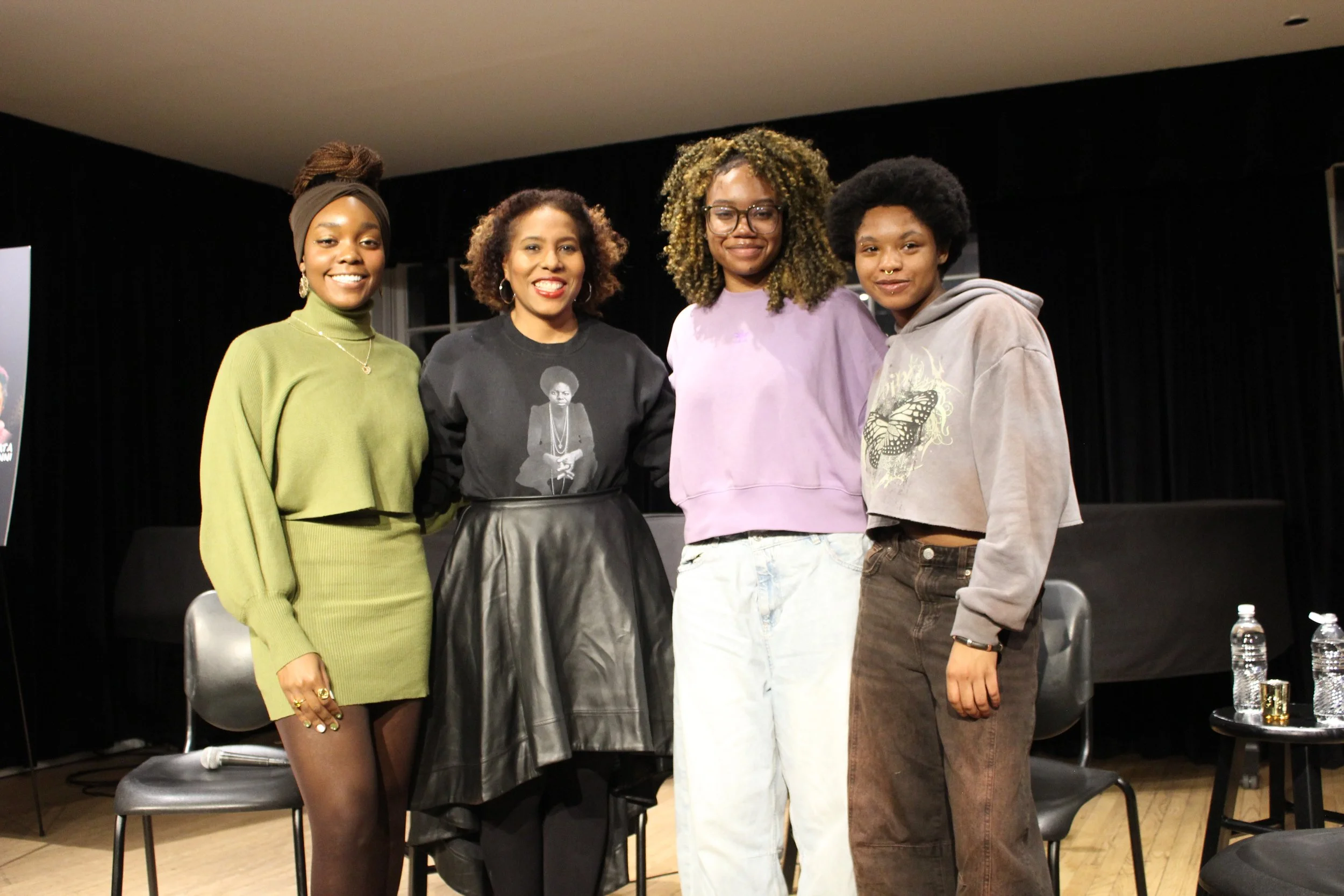
Left to Right: Juliana Durrant, Salamishah Tillet, Jade Duffus, Kai Diata Giovanni
Salamishah's response was a reflection and meditation on what it meant to get things done, versus what it meant to receive credit for what was accomplished.
“There’s a mentor of mine who says — this is the conundrum of being a Black woman — you can get a lot of stuff done if you don’t need to get credit for it. So that’s one strategy, right? … And then the other part is the Black woman that’s like, I know — because I study all these writers, and I’m a Black woman — you also will not get credit. You will be invisibilized. That’s the tradition of Black women who contributed to the great American democratic experience for most of our entire experience here. … So I’m aware of our hyper invisibility.”
In that tension is the reality that there isn’t one clean strategy. Building, elevating others, claiming credit, or choosing invisibility all carry different costs, and navigating when to step forward or stay behind the scenes is an ongoing negotiation rather than a fixed answer.
As the evening closed, the conversation shifted from strategy to resilience. How do you keep going? How do you protect your energy while navigating institutions, legacy, and political pressure?
Kai reflected on writing as practice and how they protect their energy. They described poetry as a way of translating emotion into impact: “When I write… when I write deliberately…I have to focus on what I'm trying to respond to, whether that's myself or other people or the world. I focus on the feeling. What am I feeling and what do I want to do with that feeling?”
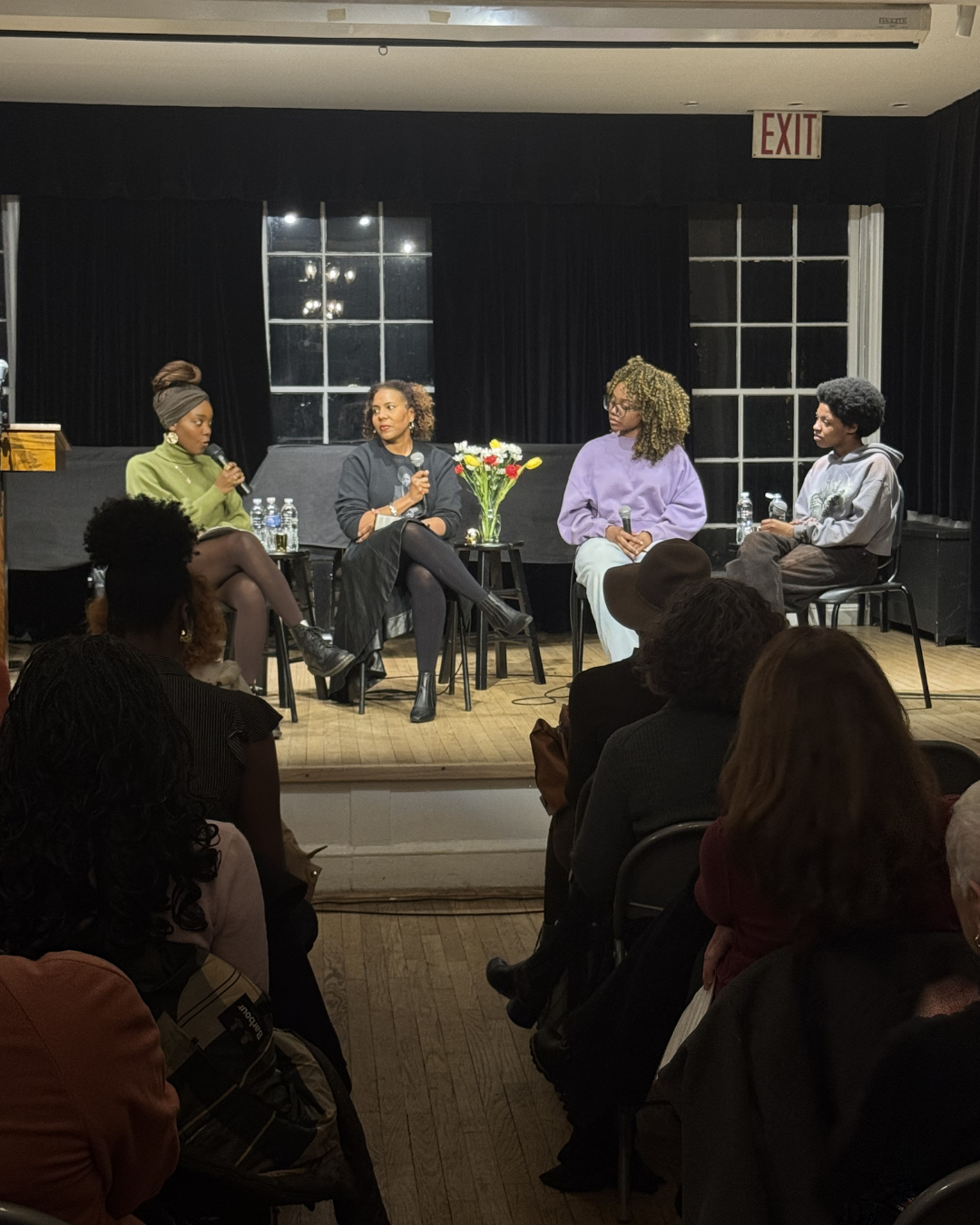
All panelists on stage
Salamishah grounded the room in lineage and care: “Different political moments and different administrations create different communities of care, and different political realities that one has to respond to. …. For all of us, I think, what’s holding us up is a sense of history — a sense of people having organized and fought for rights and survived incredible, perilous conditions before us. And then you find your people in moments of deep adversity and you deepen those relationships in ways that you wish you didn’t have to, but then also you’re profoundly appreciative at the moment. For me, it is finding those communities and spaces that matter even more than I thought they would have to before.”
ELLA Voices reminded us to be audacious, to be deliberate with our art, and to deepen our connections with community and care. The ELLA Fellowship exists within these ideas, equipping Nashers to respond to this moment with clarity, courage, and the full power of the Sadie Nash community behind them.