Teaching Social Justice in Action
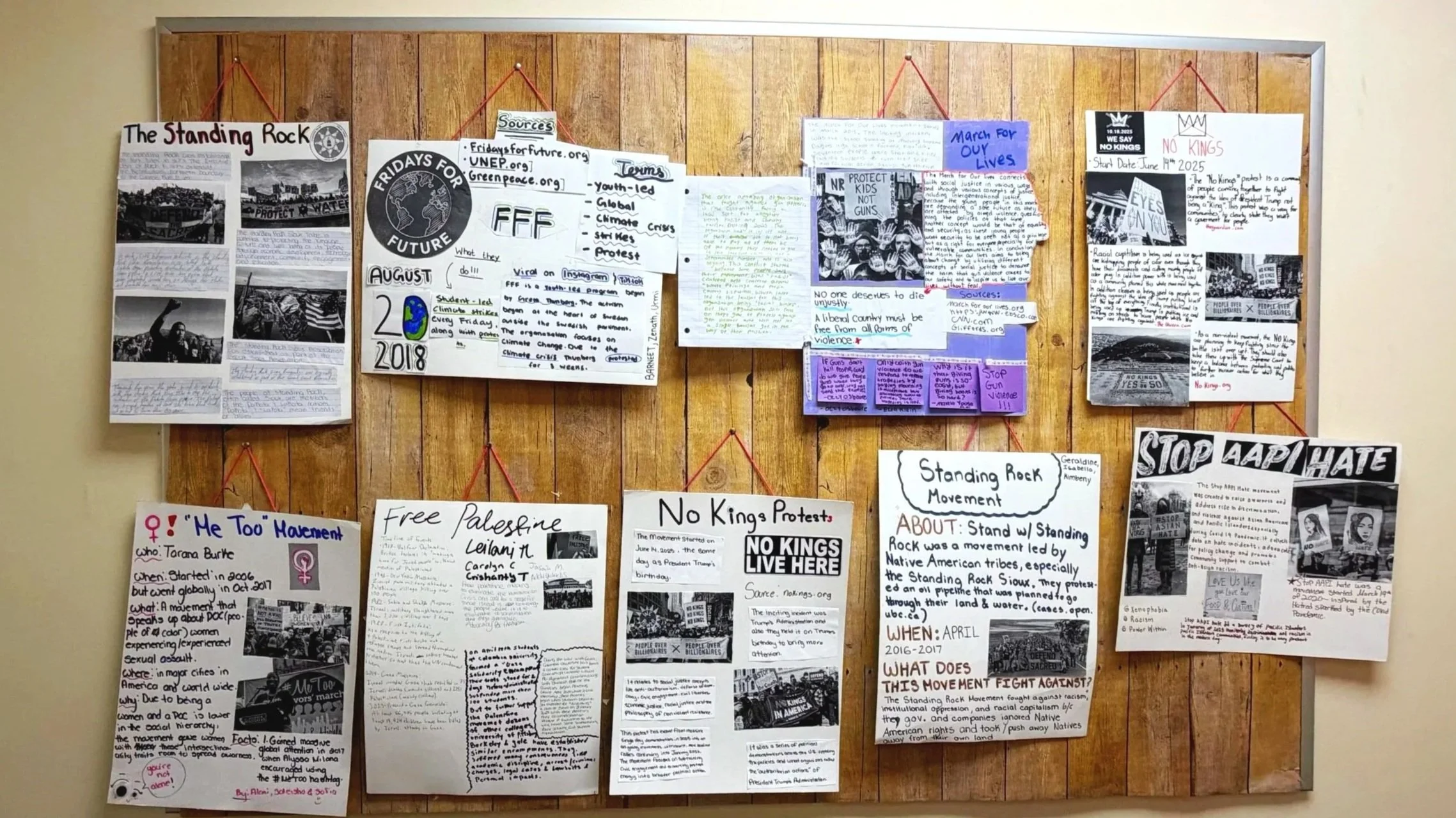
Nasher’s “Social Justice in Action” Posters
Today’s young people scroll past movements, crises, and calls to action every day, absorbing the language of social justice while still being left to wonder what meaningful change actually looks like. At Siblinghood Academy, many of our lessons begin with us asking Nashers to collectively define words and phrases. Mid-January, we decided to contemplate the definition of “social justice.”
What words do you associate with social justice? How would you define social justice in your own words?
Our goal was for Nashers to deeply understand social justice, as an idea but also something tangible that they can put into action in their own lives.
Our Tuesday Siblinghood Academy cohort collaboratively defined social justice as “the act of advocating for change and actively being involved,” while emphasizing other words like accountability, generational, unity, and ongoing. Our Wednesday cohort likewise identified key words and themes in the discussion, ranging from movements, community, to worldwide, and that “anything can be social justice.” Nashers compared notes with the dictionary, and continued to define social justice for themselves.
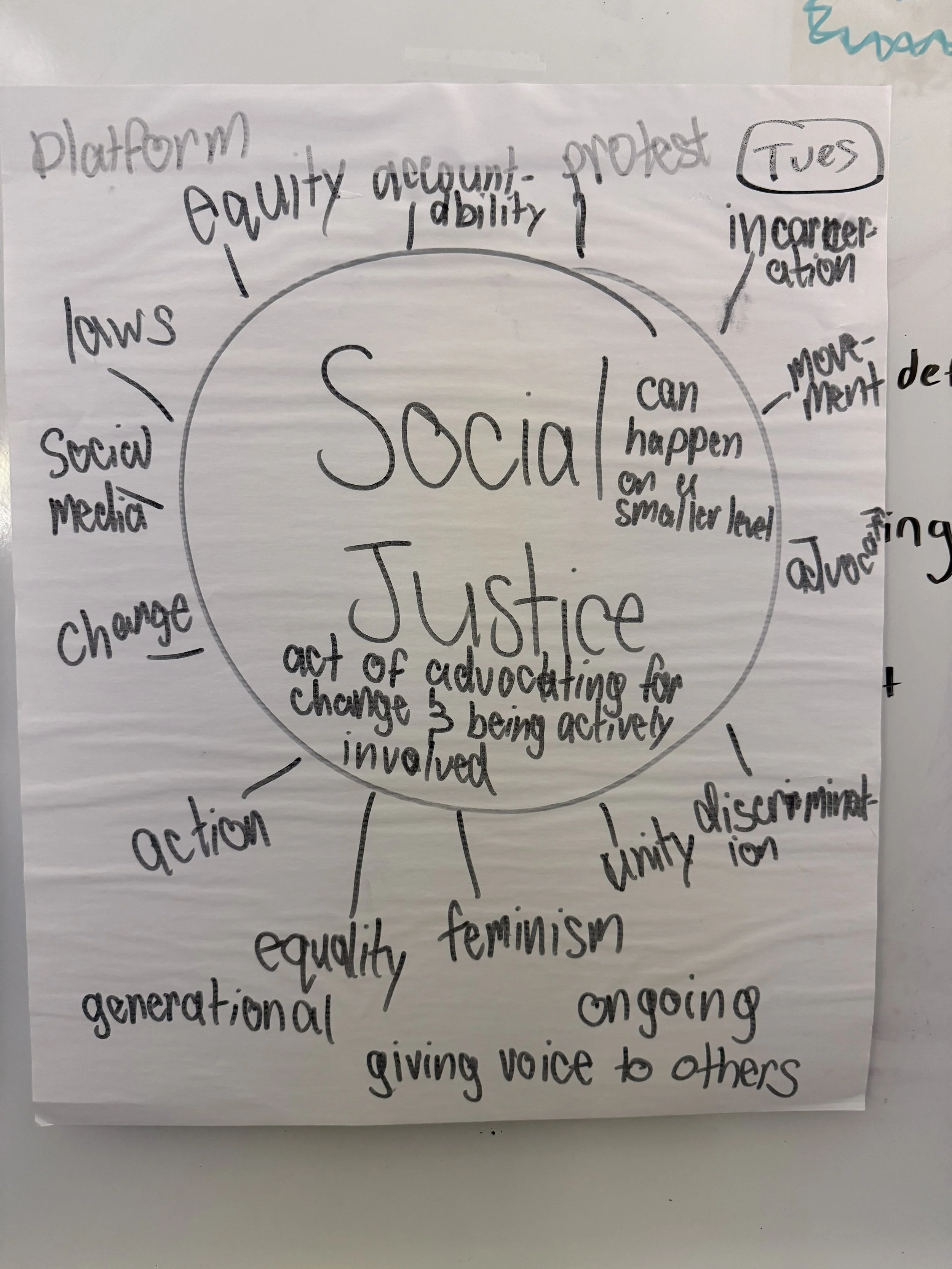
Notes from when Nashers were coming up with their own definition of Social Justice
But defining social justice was just the first step. Nashers wanted more answers. What can we do after we name injustices? While there is power in being able to name a problem, it is also important for Nashers to see tangible examples of people enacting change in their communities.
What does social justice look like in practice, beyond the buzzword?
We turned to recent history to show Nashers how they can help build new futures. Nashers were assigned and researched social justice movements from the last decade, to see how social movements that happened in their lifetime came together and created change.
Nashers confronted and were surprised by the movements they researched that didn’t have traditionally successful outcomes, like Standing Rock. We challenged them to think about why these moments of resistance and community can still matter. Our program helped create space for nuanced conversation about movement success, and helped Nashers form their own critiques, opinions, and analysis on the status of movements, and considered how they could move forward.
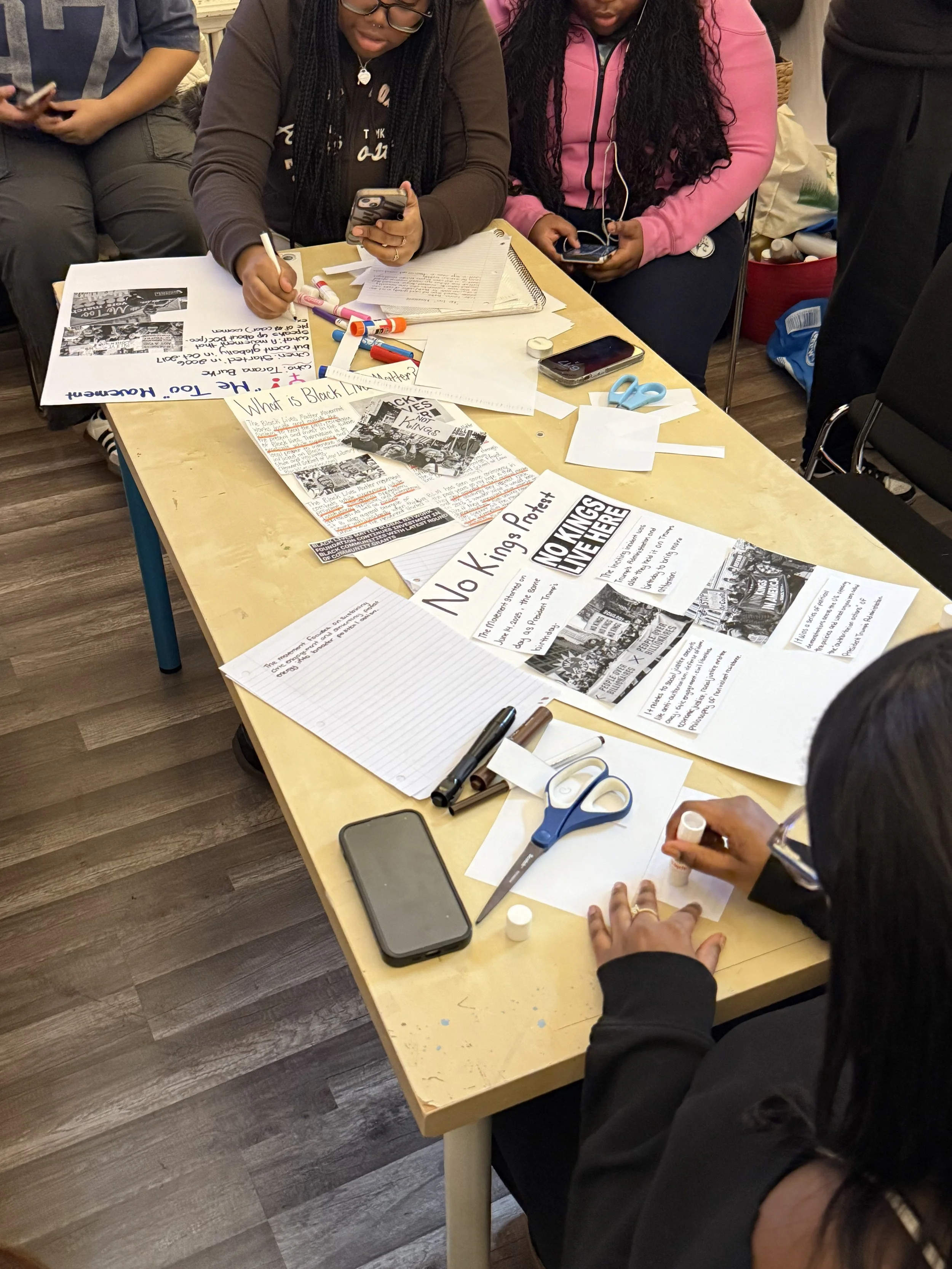
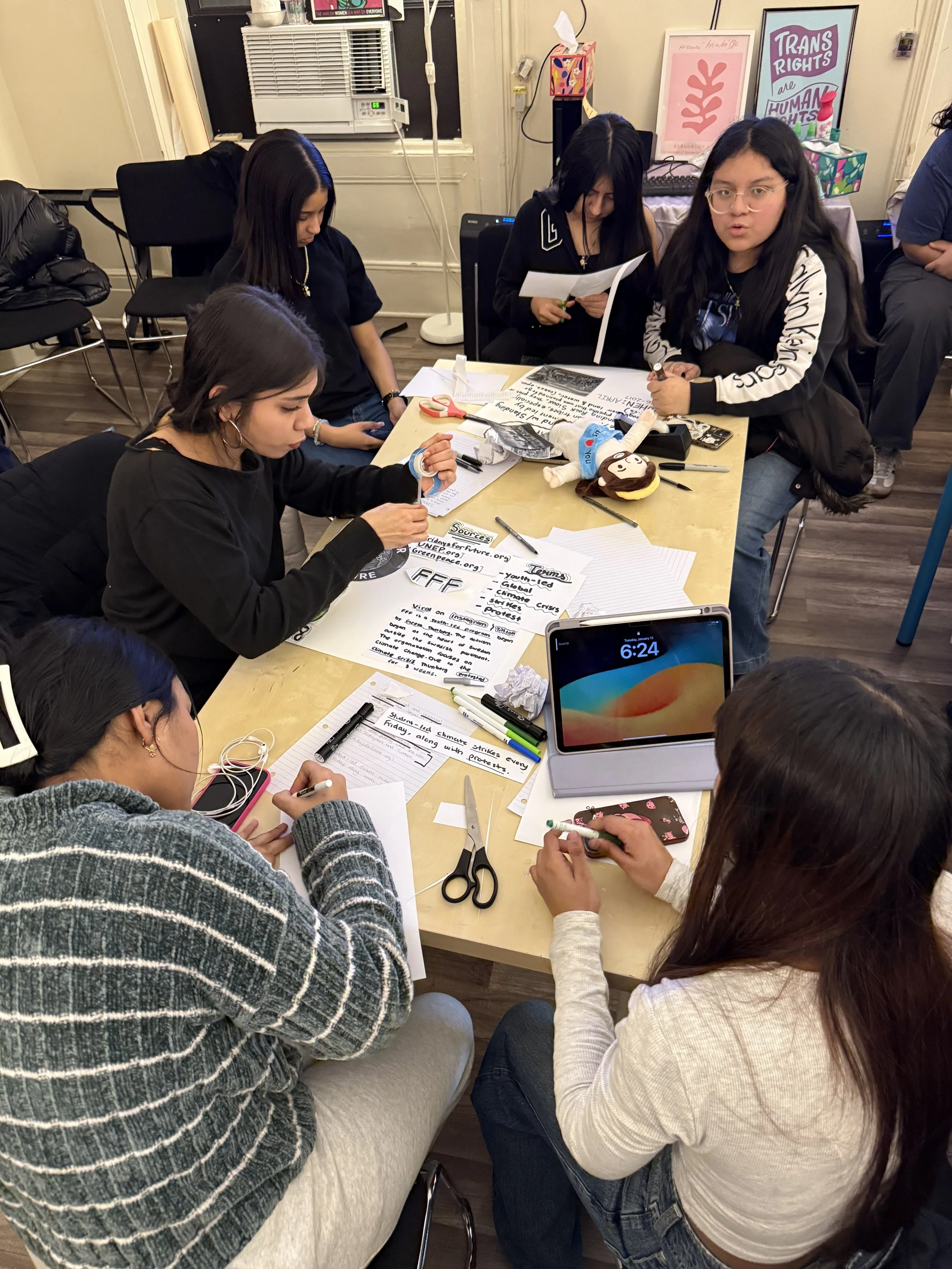
Nashers working on their Social Justice in Action Projects
It was incredible to watch Nashers question, learn, and reflect and think about how they can incorporate the lessons of the past into the actions of the future.
The posters in the hall of our NYC office from this project highlight what Nashers learned and honor the movements, with all of their successes and shortcomings.
You can also see all of the projects linked in the Nasher Liberation Library here.
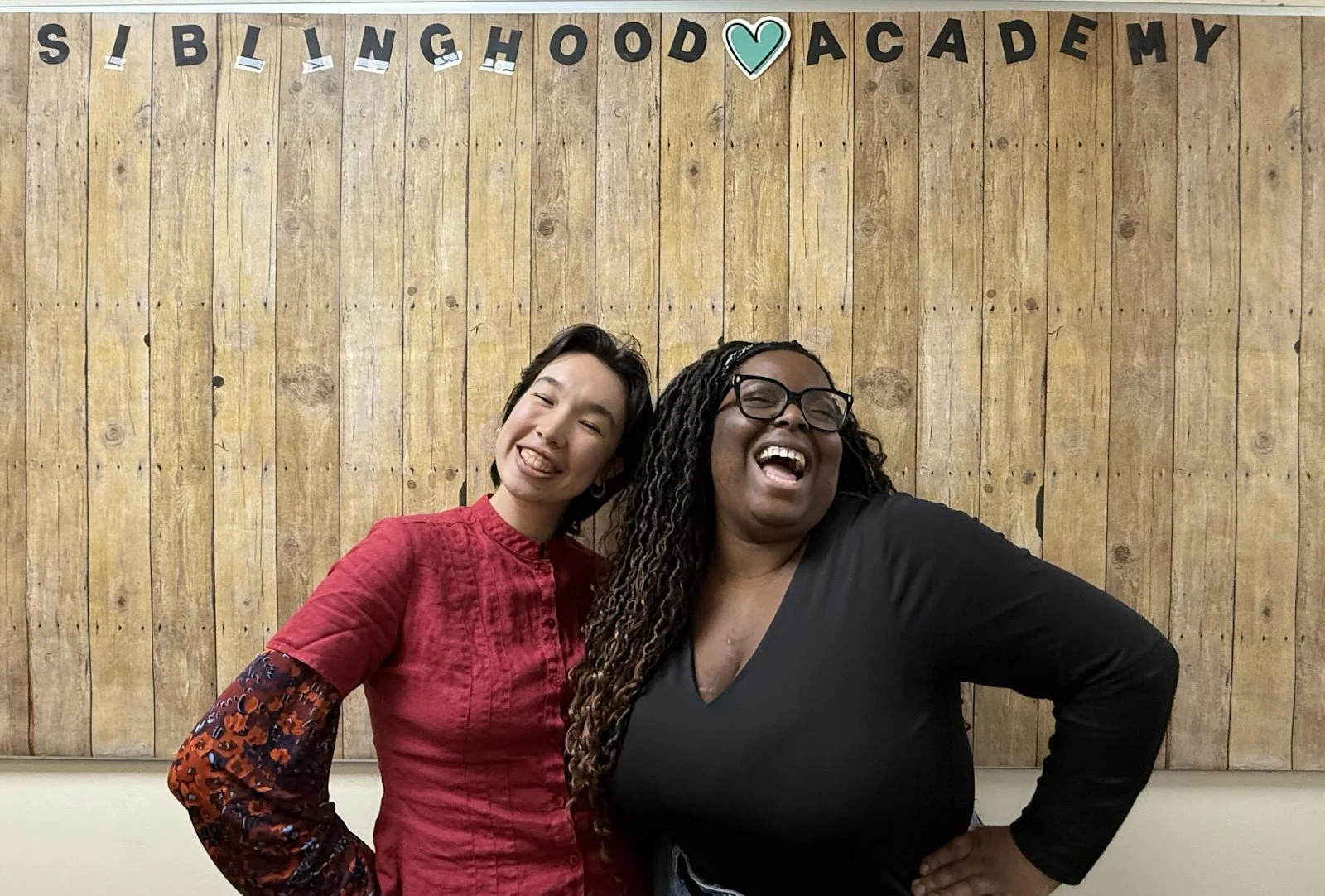
Left to Right: Dean Tiana Quon (she/they), Faculty Sammy Aya (she/her)
Sammy Aya (she/her)- Currently serves as Sadie Nash’s Partnership Coordinator. She has been facilitating with Sadie Nash for almost three years, and this is her first time leading Siblinghood Academy! When she’s not at work, she’s at home watching a movie and putting together puzzles.
Tiana Quon (she/they)- Is originally from the Bay Area in California, and is a senior studying sociology at Barnard College. When not at school or Sadie Nash, you can often find them wandering NYC parks, voraciously reading, or experimenting with something new in the kitchen.